Edo Machi-kata Taiho Jutsu江戸町形逮捕術

The Cunningham collection · A-1–A-2

Armor

For regular patrol duties and even ceremonial occasions, dōshin dressed in simple patterned kimono, often with the bottom edges pulled up in front and stuck in their obi, dark blue tabi, and a black haori. (Wearing a kimono without hakama was called kinagashi style. In most social situations, it was considered improper for a samurai not to wear hakama. However, dōshin were generally from the lowest samurai rank and social status.) Before arresting dangerous criminals, dōshin dressed in black waist-length kimono and tight-fitting pants. Chain mail undergarments as well as heavy cloth hand and shin wraps with metal strips sewn into the cloth provided protection against sword or knife cuts to their feet or forearms. To protect their heads, they wore hachimaki with either metal wires sewn between the cloth layers or a hachi-gane (metal strip) placed over the forehead. Finally, they bound the hachimaki over the tops of their ears to prevent them from being severed by a glancing sword slash. Copyright © 2009. Please do not use the photographs or the text on this site without permission. (Image use must include the statement: "Copyright © 2009. Photograph by Don Cunningham.")

— Don Cunningham, introduction to the catalogue pageSource A4

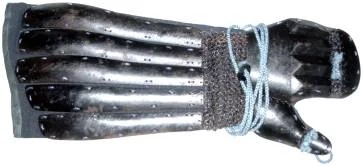
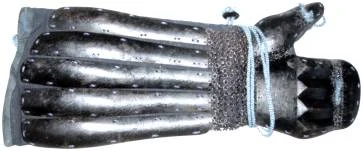
Armor, catalogue number A-1, view 1 of 4 from the Cunningham collectionArmor, catalogue number A-1, view 2 of 4 from the Cunningham collectionArmor, catalogue number A-1, view 3 of 4 from the Cunningham collectionArmor, catalogue number A-1, view 4 of 4 from the Cunningham collection

A-1

Armor

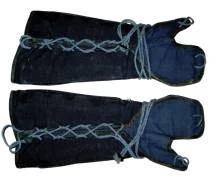
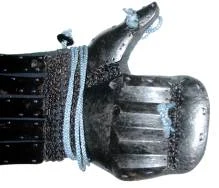
These are a pair of Edo-period kote (wrist and hand guards) made of iron strips and chain mail sewn on top of heavy blue cloth. The iron strips and chain mail are urushi (painted black) to prevent rusting. Edo-period doshin and other non- samurai assistants often wore such kote for protection against being cut with sword blades or other edged weapons during major police raids or the arrests of dangerous criminals.Source A4

Catalogue text and photographs by Don Cunningham. Copyright © 2009. Photograph by Don Cunningham.

Archived catalogue page · Link to this object

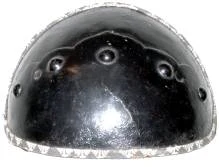
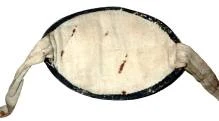
Armor, catalogue number A-2, view 1 of 3 from the Cunningham collectionArmor, catalogue number A-2, view 2 of 3 from the Cunningham collectionArmor, catalogue number A-2, view 3 of 3 from the Cunningham collection

A-2

Armor

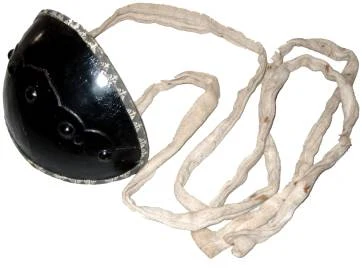
This is a late Edo-period kabuto (helmet) called kuro uroshi hitai ate. It is a classic example of an alternative form of armored head protection including two iron plate construction with large o-boshi rivets. It has an undulating plate edge and pierced circular decorations. The ukebari is original padded cotton cloth lining and stenciled shobu-gawa leather trim. The hinobi-no-o is period original with matched cotton cloth tie-cords.Source A4

Catalogue text and photographs by Don Cunningham. Copyright © 2009. Photograph by Don Cunningham.

Archived catalogue page · Link to this object

Sources for this page

  1. A4Cunningham collection, “Armor”. e-budokai.com/weapons/armor.htm · © 2009 (capture 2012-10-22) · Original organizational material
  2. D36Owner’s confirmation of permission to republish the organization’s and Dr. Cunningham’s texts, photographs and graphics. project record, docs/rights-and-attribution.md · 2026-11-03 · Owner-supplied file
Full source register and method