— Don Cunningham, introduction to the catalogue pageSource A27
T-1
Tessen
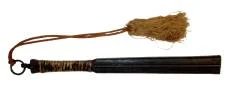
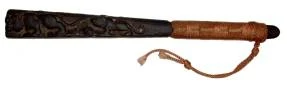
This is a solid non-folding tessen cast of iron in the shape of a closed fan. This Edo-period tenarashi-gata tessen is made in the style of maiohgi-gata, a fan used in traditional Japanese dancing. It has a rattan-wrapped tsuka.Source A27
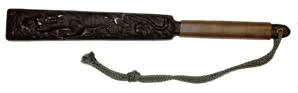
This is a solid non-folding tessen cast of iron in the shape of a closed fan. This Edo-period tenarashi-gata tessen is made in the style of gunsen-gata or military-style fan. A dragon and two tigers on opposite sides represent the mythical guardians and beneficial forces of nature. It has a leather-wrapped tsuka.Source A27
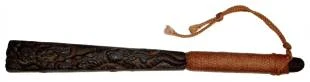
This is a solid non-folding tessen cast of iron in the shape of a closed fan. This Edo-period tenarashi-gata tessen is made in the style of sensu-gata. A dragon and two tigers on opposite sides represent the mythical guardians and beneficial forces of nature. It has a cord-wrapped tsuka.Source A27
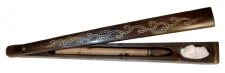
This is a solid non-folding tessen cast of bronze and steel in the shape of a closed fan. This Edo-period tenarashi-gata tessen is made in the style of sensu-gata. This tessen also functions as a yatate (brush holder) with a hinged cover inlaid with silver decoration to hold a small brush and ink for writing. The cloth would be soaked in ink and dried before carrying.Source A27
This is a solid non-folding tessen cast of iron in the shape of a closed fan. This Edo-period tenarashi-gata tessen is made in the style of a very convincing maiohgi-gata, a fan used in traditional Japanese dancing. Each outer rib has the moon and the sun, signifying in and yo (Japanese for yin and yang), cut out to display the underlying gold washed copper leaves underneath and between the bolstered pieces of russet iron.Source A27
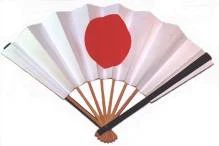
This is a folding tessen called a menhari-gata. The outer ribs are made of iron while the inner ribs are made of bamboo. This sixteenth-century tessen is made in the shape of maiohgi-gata, a fan used in traditional Japanese dancing. It dates to the Sengoku period.Source A27
This is an Edo-period folding tessen. The iron outer ribs are very plain with no decoration. The inner ribs are made of bamboo. This menhari-gata is made in the shape of a sensu-gata or basic fan style.Source A27
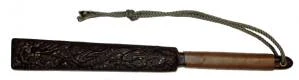
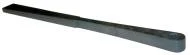
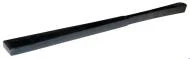
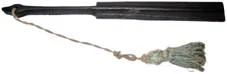
This is a solid non-folding tessen of forged iron in the shape of a closed fan. This Edo-period tenarashi-gata tessen is made in the style of a maiohgi-gata and was part of a collection from Kanazawa in Ishikawa prefecture. It is made of heavy square section iron and is 13-3/4 inches long. A typical Edo-period torinawa (arresting rope) or torihimo (arresting cord), hand-woven dark green rope, was originally secured to and wrapped around the handle.Source A27
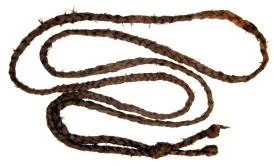
An Edo-period torinawa (arresting rope) or torihimo (arresting cord). This is a hand-woven dark green rope made from hemp fibers. The torinawa was originally secured to and wrapped around the handle of a solid tessen.Source A27
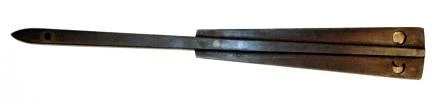
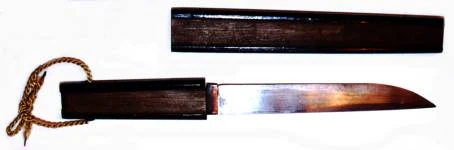
This is an Edo-period shikomi-sensu, a dagger hidden in a mounting made to appear as a closed fan. The shikomi-sensu was the favorite weapon of assassins, gamblers, and other criminals.Source A27
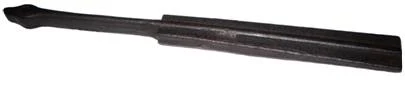
This is a solid non-folding tessen cast of iron in the shape of a closed fan. This Edo-period tenarashi-gata tessen is made in the style of a maiohgi-gata. The basic form and crude workmanship indicates the tessen was made by a low-ranking craftsman.Source A27
D36Owner’s confirmation of permission to republish the organization’s and Dr. Cunningham’s texts, photographs and graphics. project record, docs/rights-and-attribution.md · 2026-11-03 · Owner-supplied file